Published in The Singapore Architect, Issue 13/2018. The text has led to the ongoing publication series STREET REPORT.
~
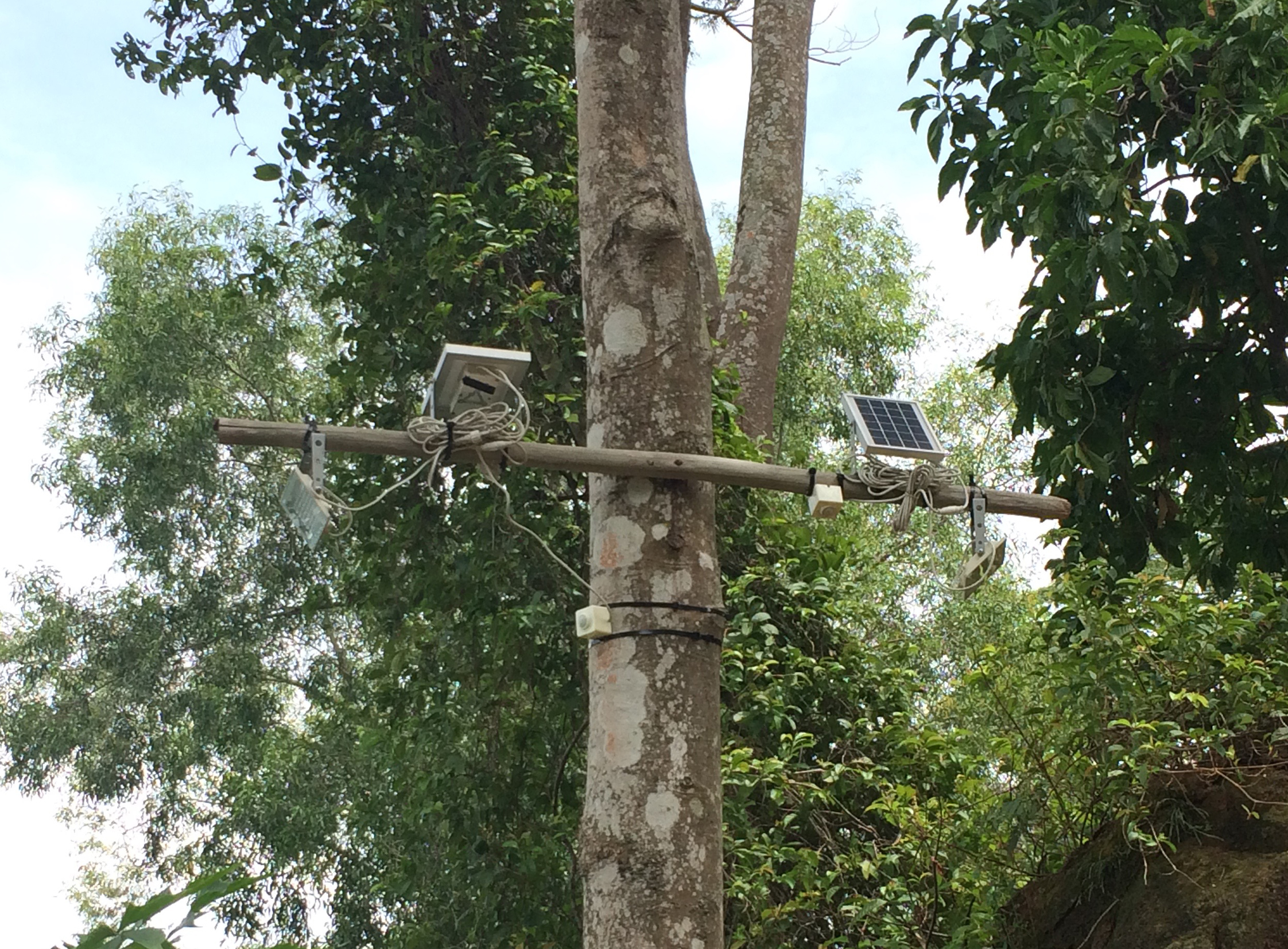
In a neighbourhood that has existed for some time, life within the various apartments, shops and offices will naturally spill out into the common corridors and streets, like a plant searching for more sunlight. These spilling-out is most natural and joyful within HDB estates. But it can also be observed within close-off environments such as air-conditioned office buildings, where they commonly trickle out from openings such as service backdoor areas.
We can summarise three stages of consciousness for the self-built object or structure.
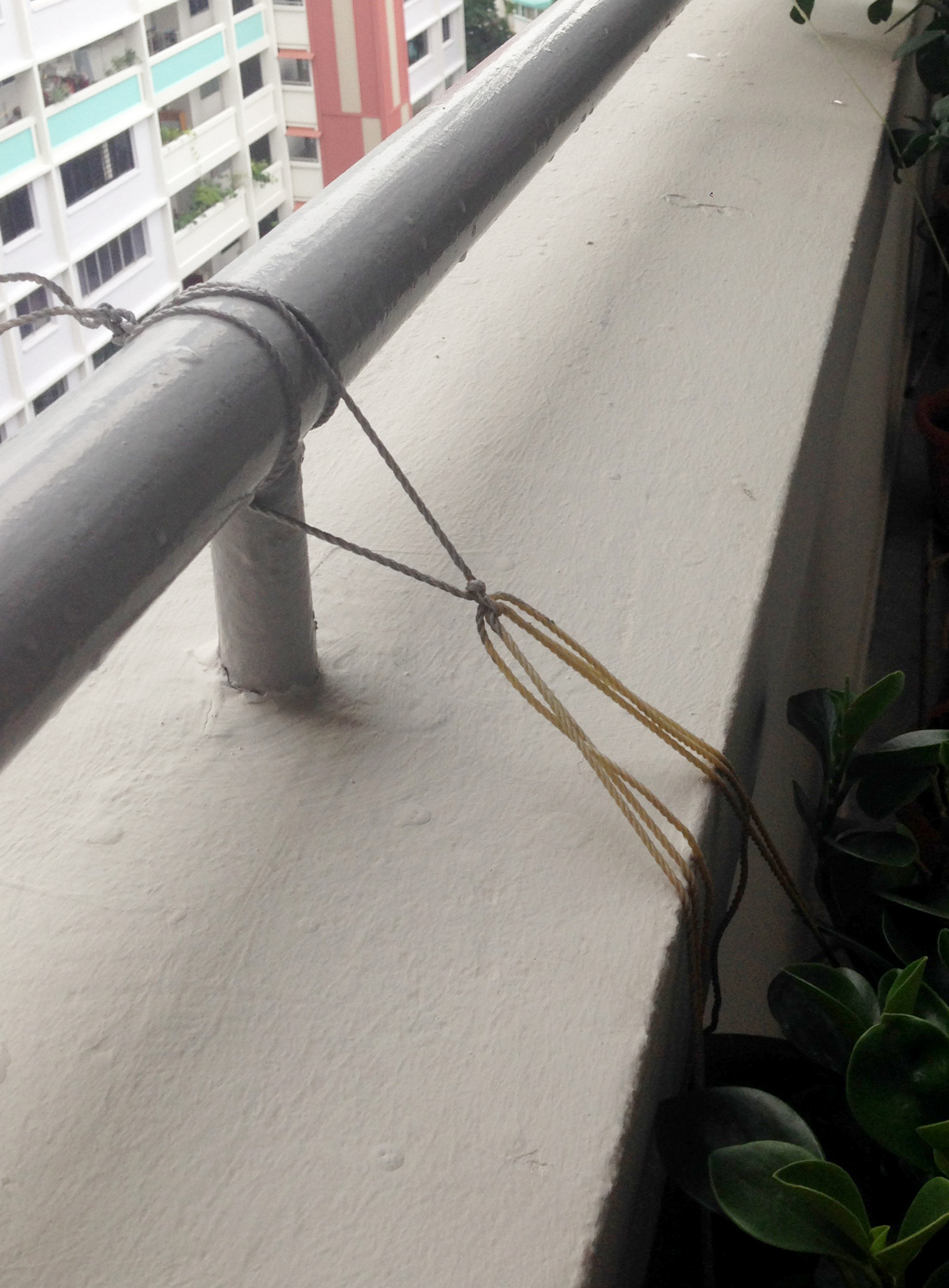
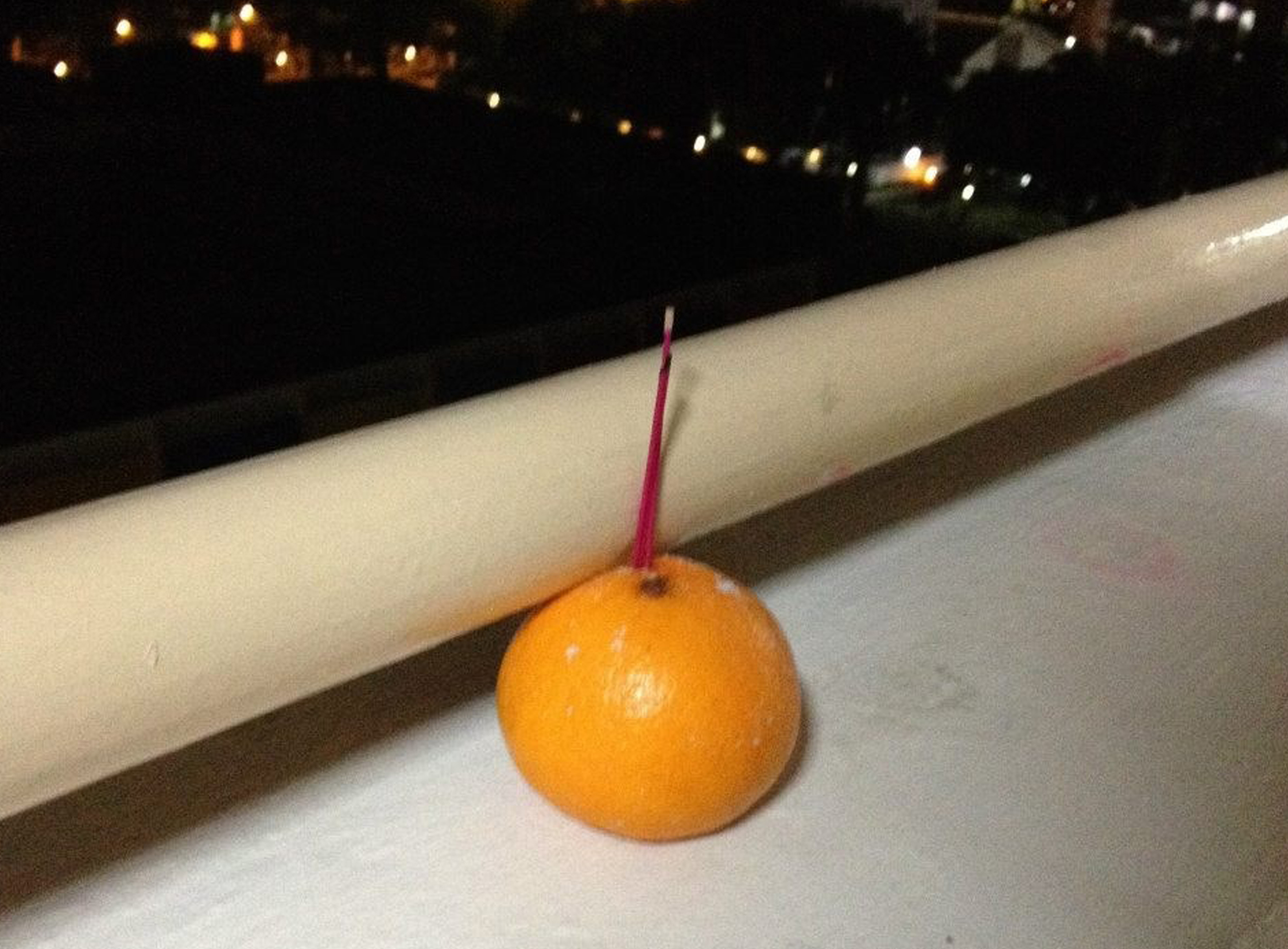
A self-built at its simplest could seem spontaneous or seemingly unthinking. Its function can sometimes only be understood by the person that build it. As an observer, we can only speculate its true function. A scribble on the floor to mark a territory or a memory. A series of ropes tied to a railing may suggest a hanging function. Sometimes it may not be even for a practical function but purely decorative, such as a key chain attached to a mundane water pipe.
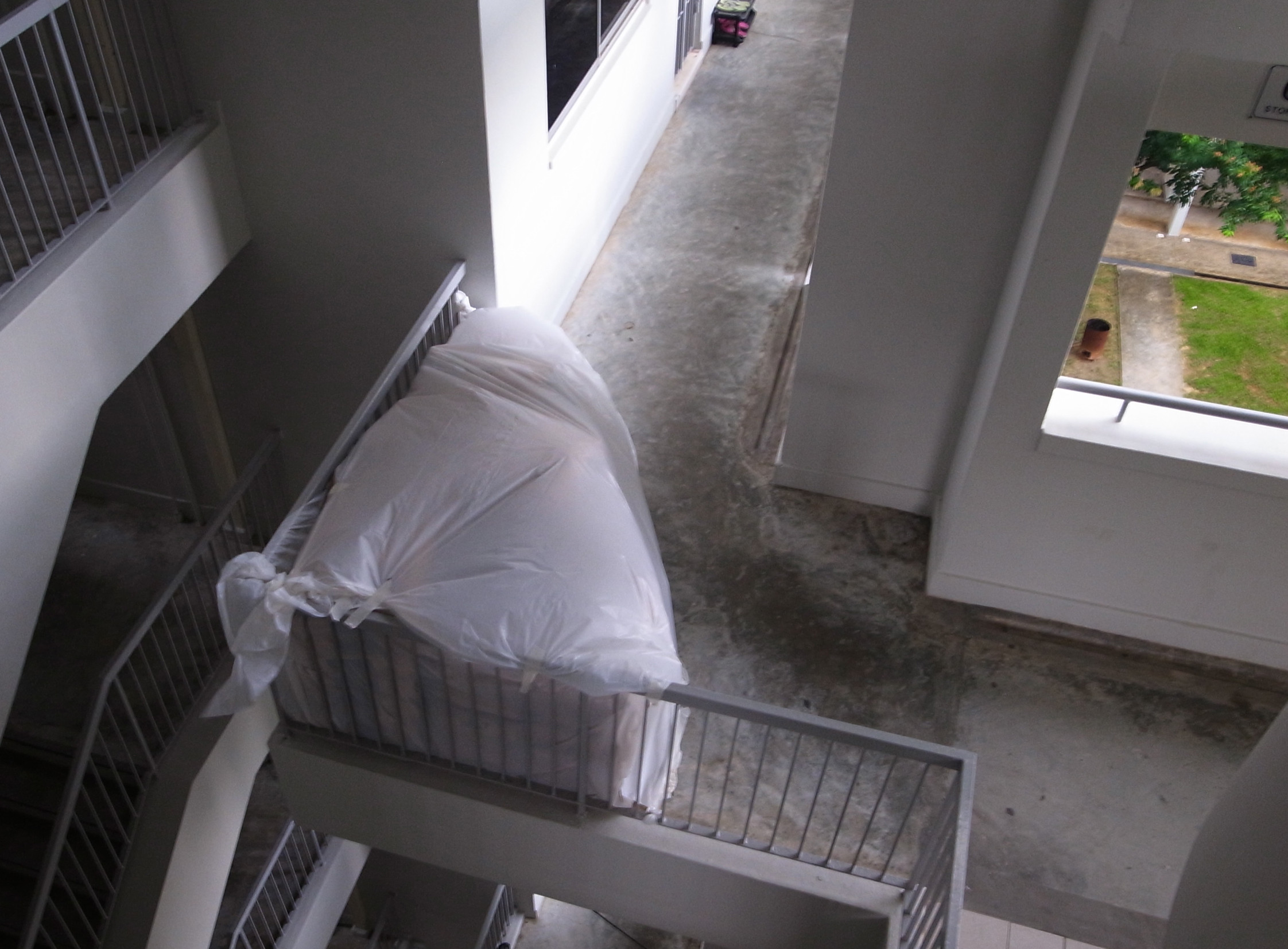
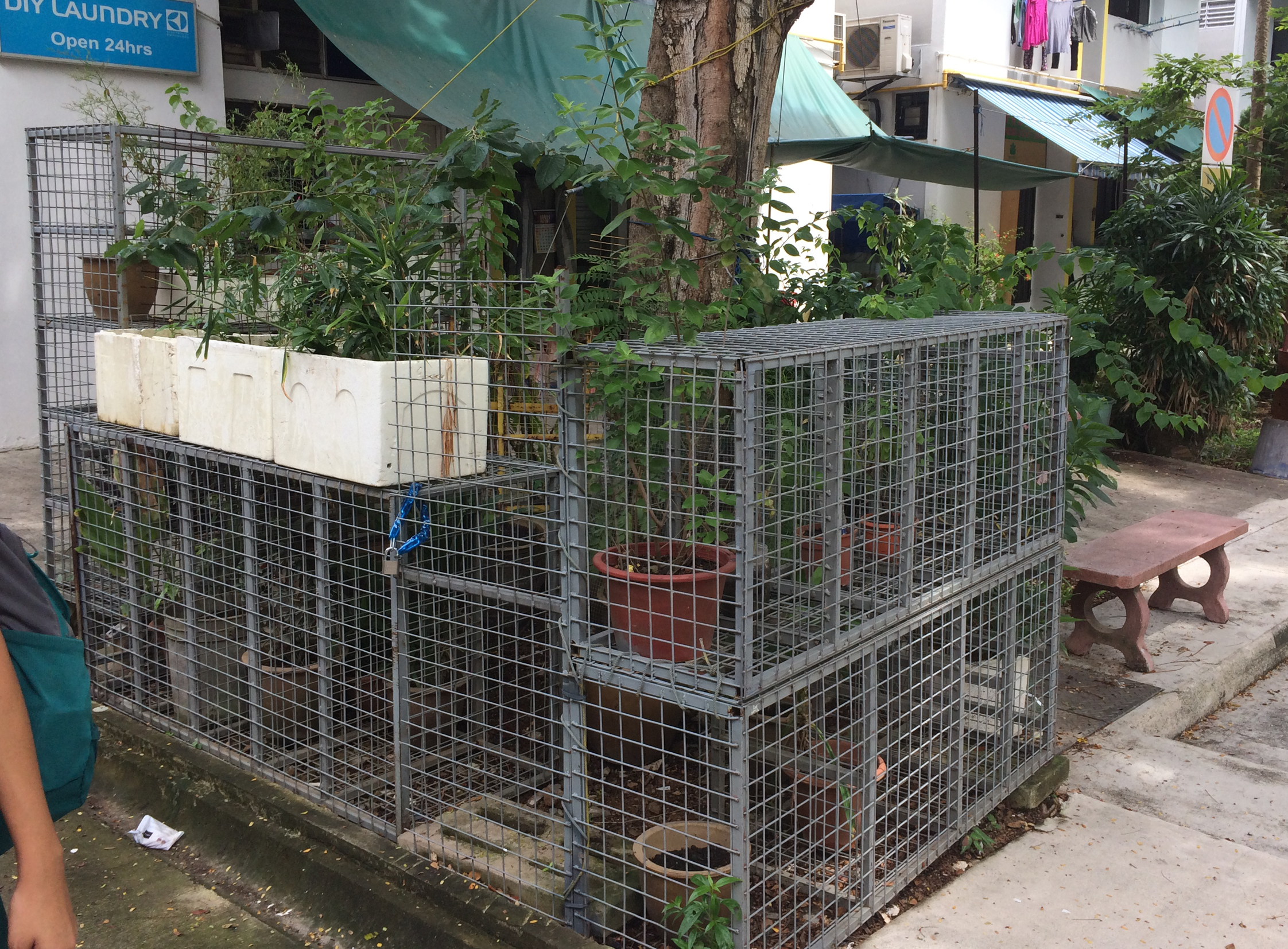
Other self-builts may become more strategic in their intentions. A common observation for such self-built is the arrangement of flower pots to catch the sun. By building platforms or extending corridor railings, the needs of various plants can be meet in the limited sun-space of the corridors.
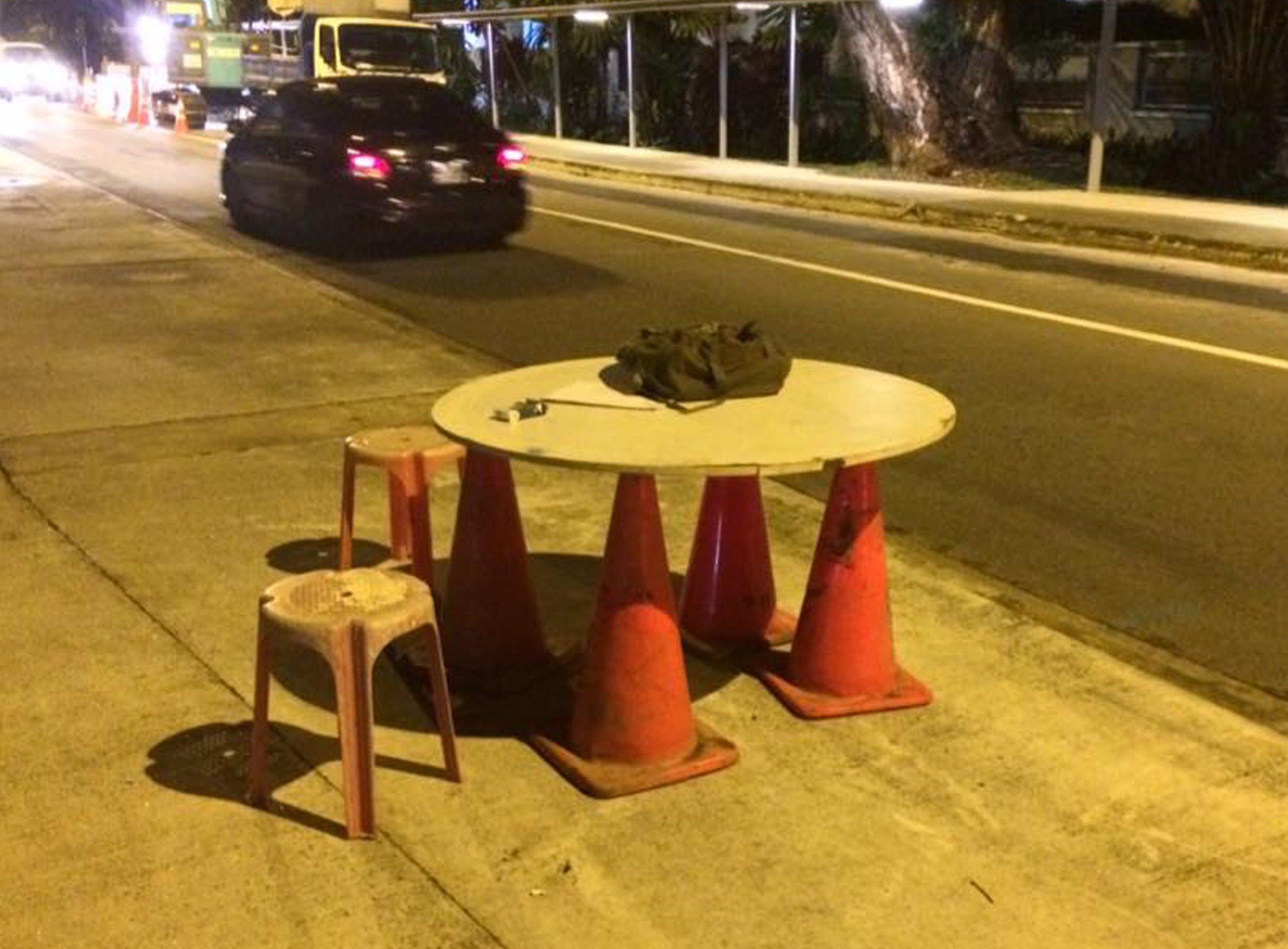
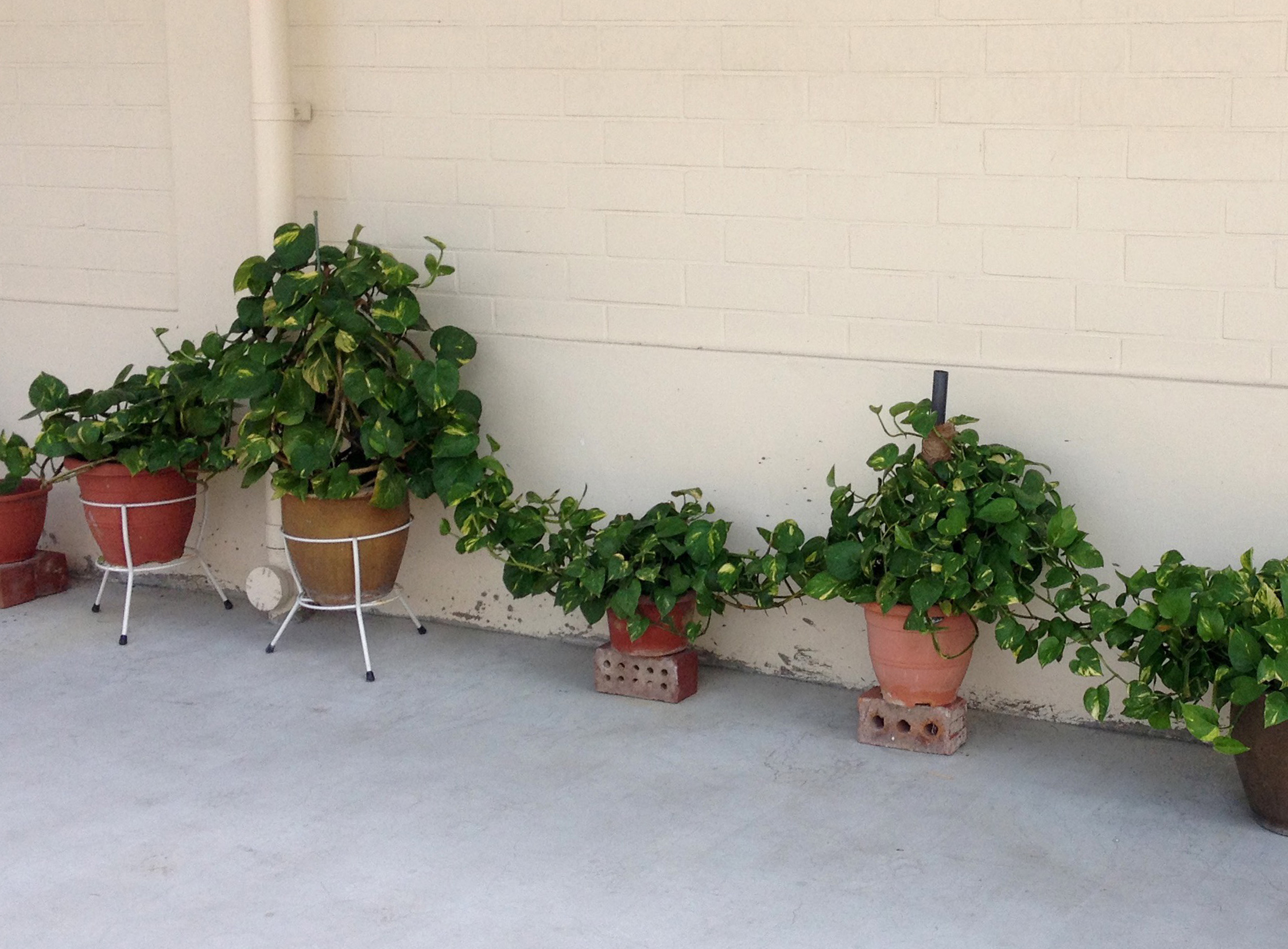

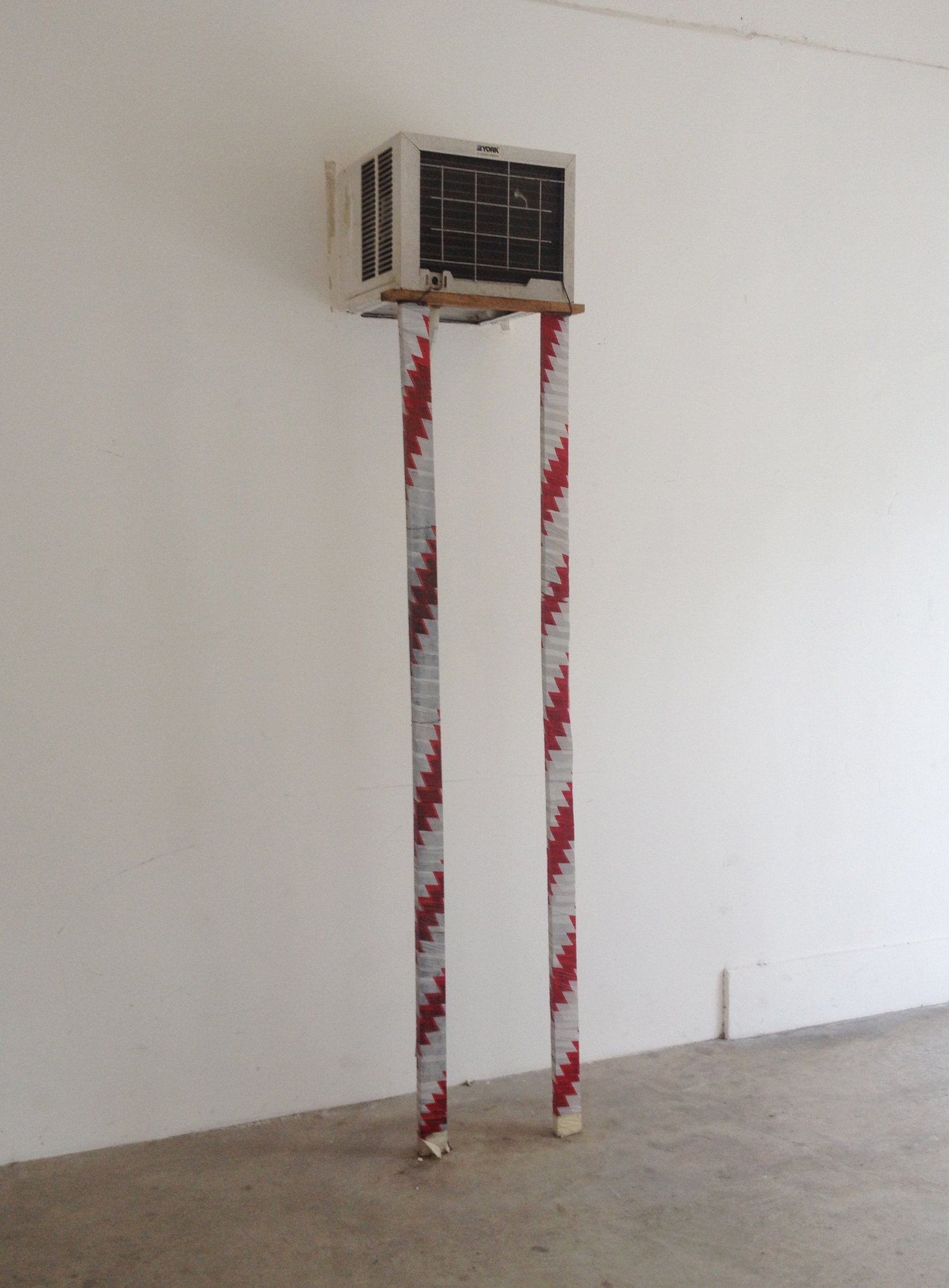
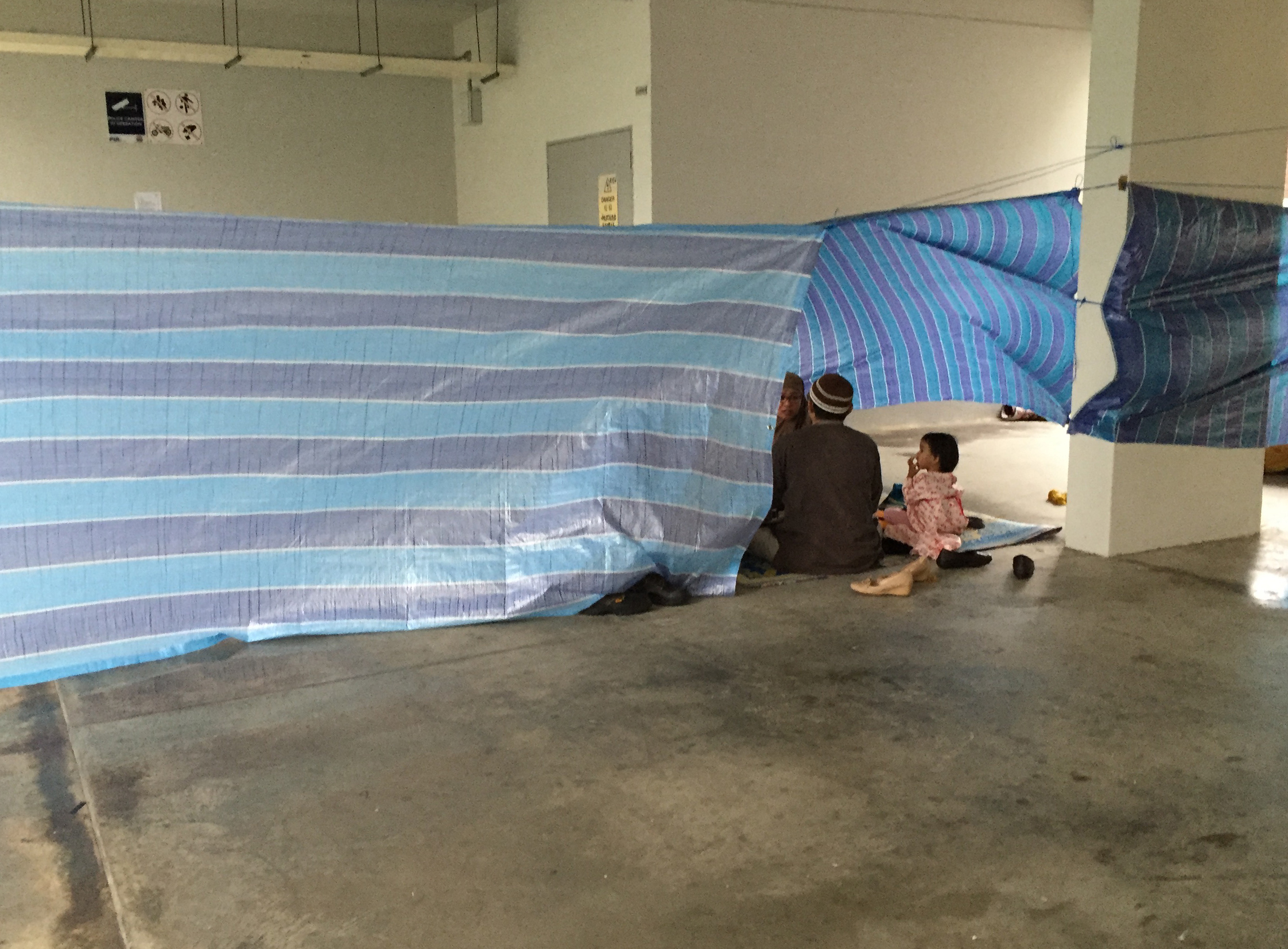
At its most physically defined, much effort had been taken to create an arrangement of self-built structures or objects to extend activities outside. These complex self-builts may be to extend personal spaces into unused public areas, or due to natural development of a community over time.
Observing theses various self-built types can be a tool in understanding or catching a glimpse of possibilities for a more organic built environment. Rather than describing them as parasitic, the self-built can be seen as endless examples of good spatial gestures. They are precise in their intentions, but are ambiguous enough to continuously re-define its form.
Adjusting For Body
Throughout a day’s activities, we are constantly trying to find spaces that are of comfort for the body. Most of the time, the build environment provides us with our needs. When it doesn’t, self-built adjustments can be made, either by manipulating or creating additions to our surroundings.


Extensions
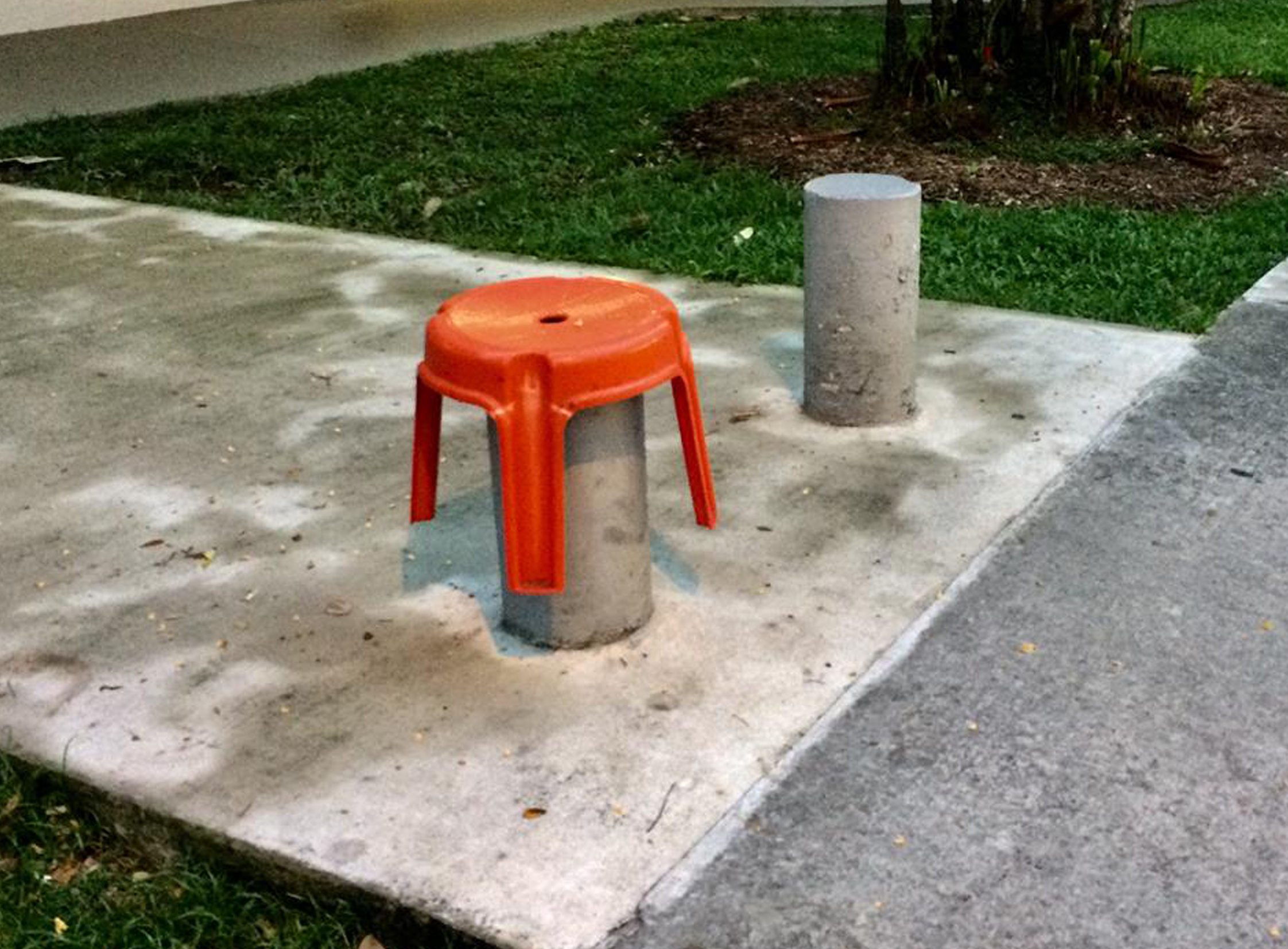
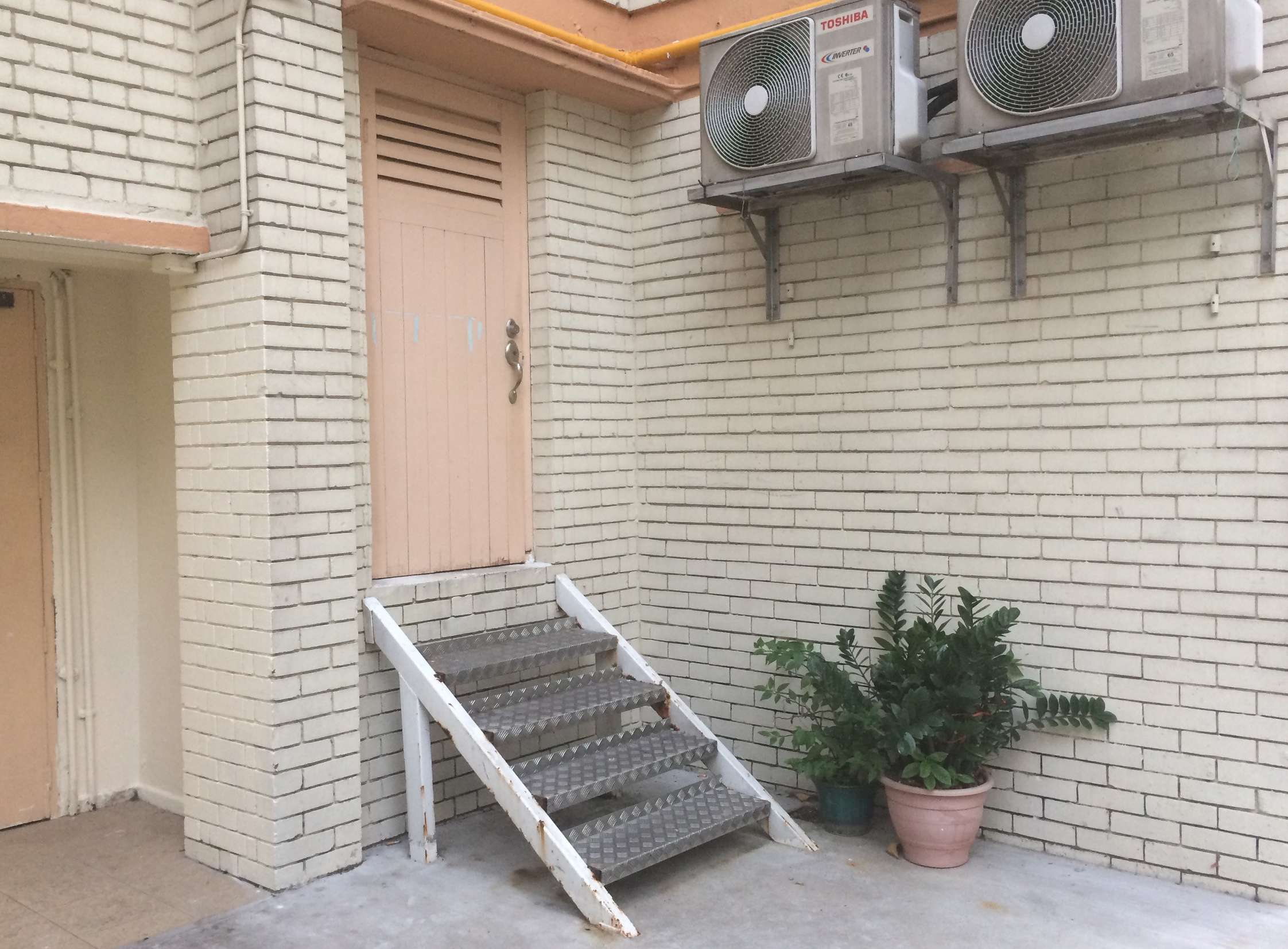
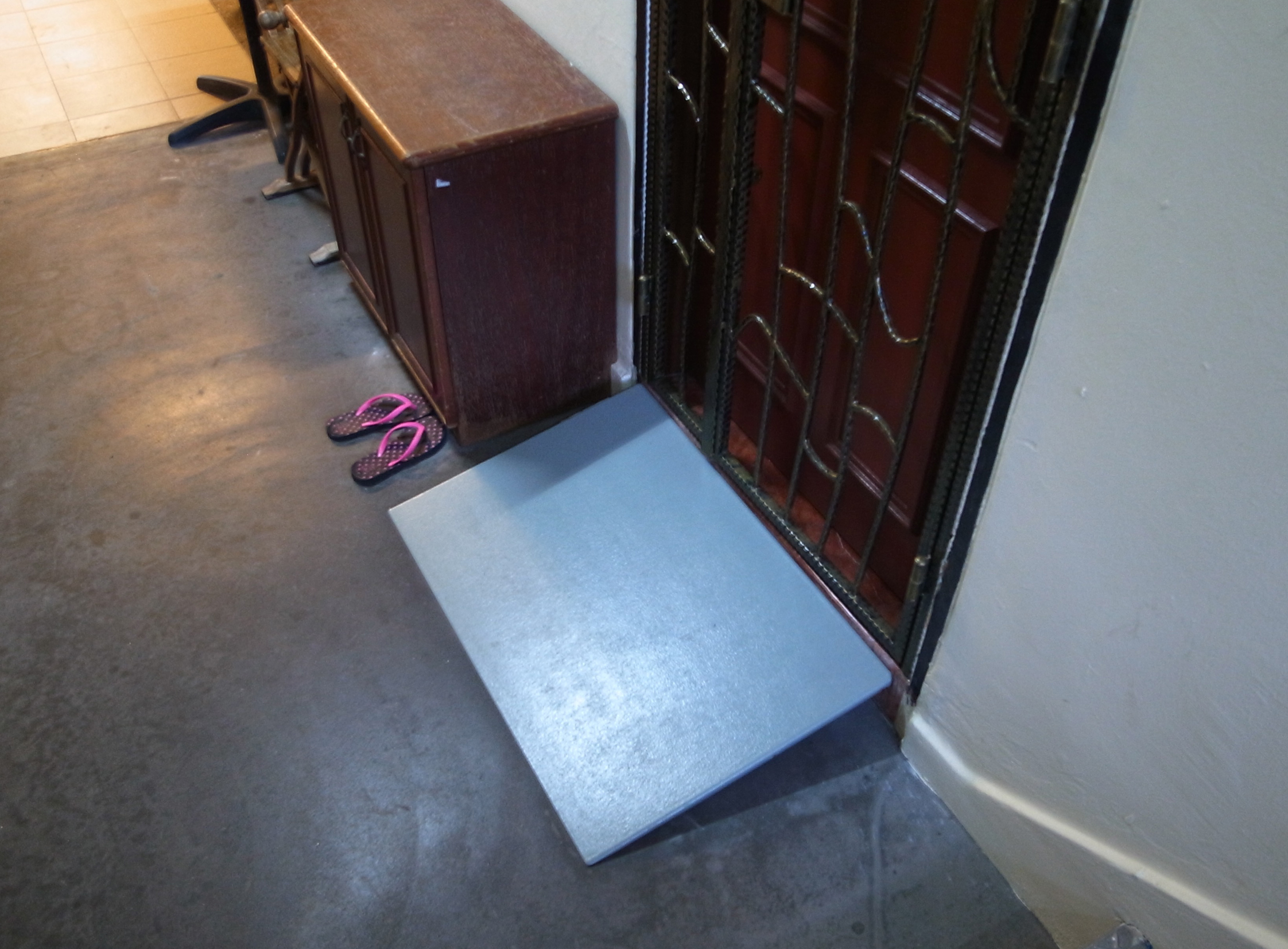
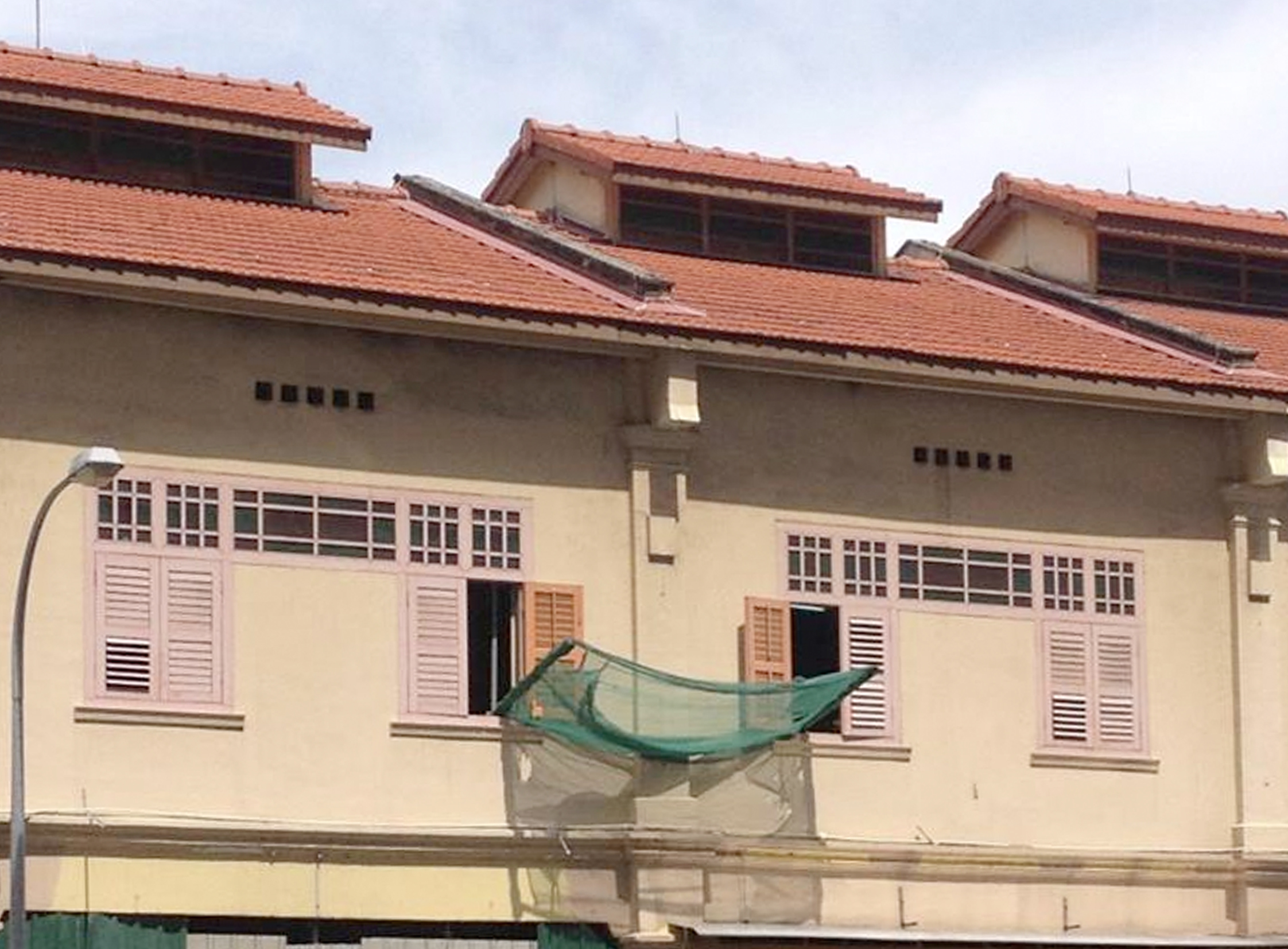
Hacking down the build environment may be perceived as a crime, it is much more common for a self-built to have the character of extending. Extensions may start of as small and temporary. Needing more space to seat, the need for more lighting in a dark forgotten street corner, or to reach up to a high spot. Over time and with constant use, they will be less noticeable and will blend with the formal built environment. When this happens, we can surely observe extensions being made from the original extension.


Corridor Presence
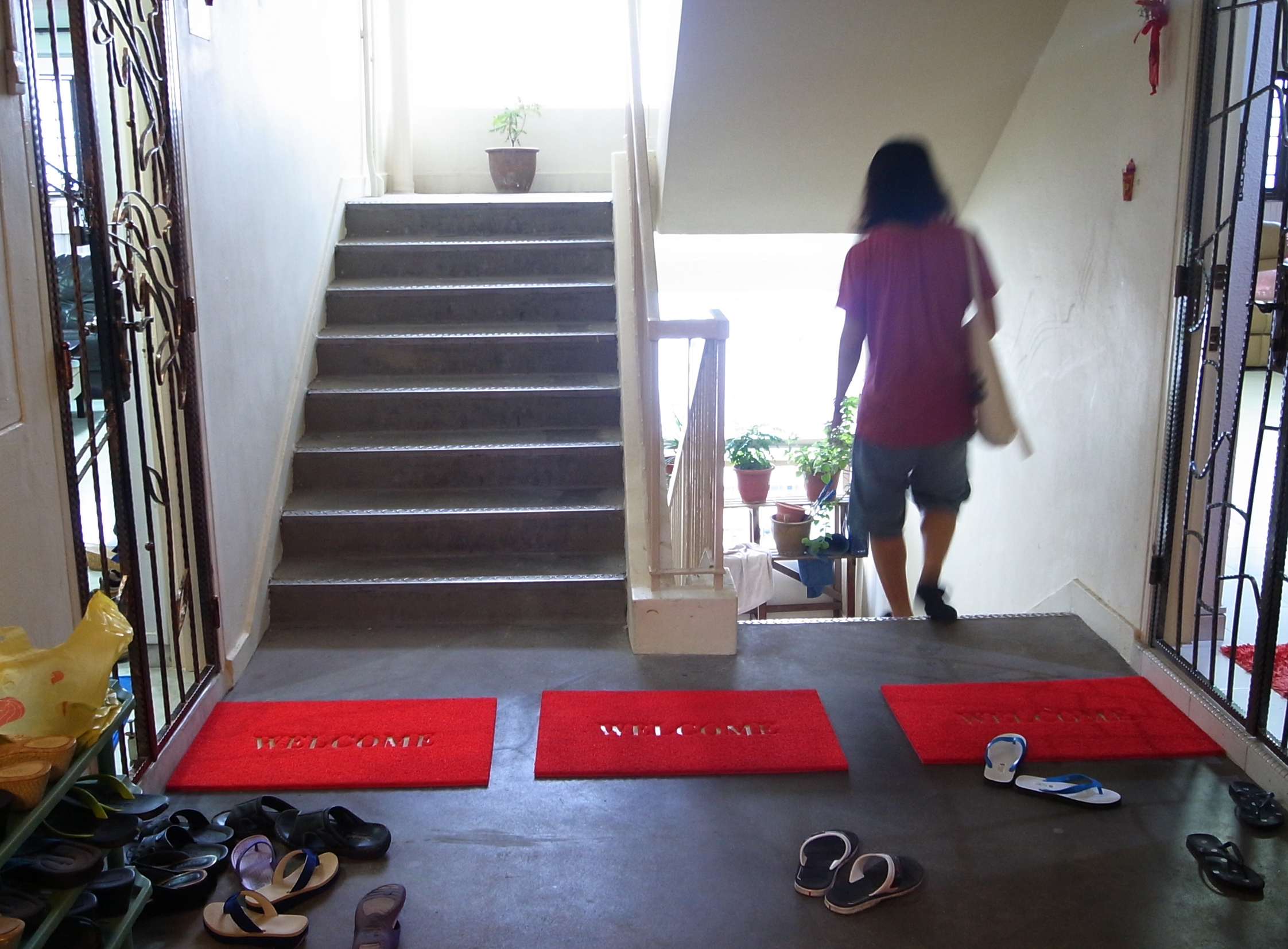
Over a period of time, apartment dwellers comfortable with their neighbourhood (and neighbours) may build their presence in the public corridors. A dweller may start by leaving their shoes or adding a dust mat, a sign of trust that it will not be stolen. After this initial gesture, it is then up to the decision of each individual dweller on how to expand. Sometimes an extension of the living room is build. If a family member becomes a neighbour, the indoor spaces of both dwellers may even extend to occupy the whole public corridor.
Spaces in Between
Railings or columns are some of the easiest spaces to self-build. Spaces can be build-up by leaning in between the existing structures. Clamps, screws or ropes can also be conveniently attached to them, creating new functions. Sometimes, a ready-made object surprisingly fits exactly to a formally built structure. Two unrelated dimensions become logical together. When an in-between space has the presence of a self-built, they will have a semi-private feeling.
Collecting (or not collecting) Resource
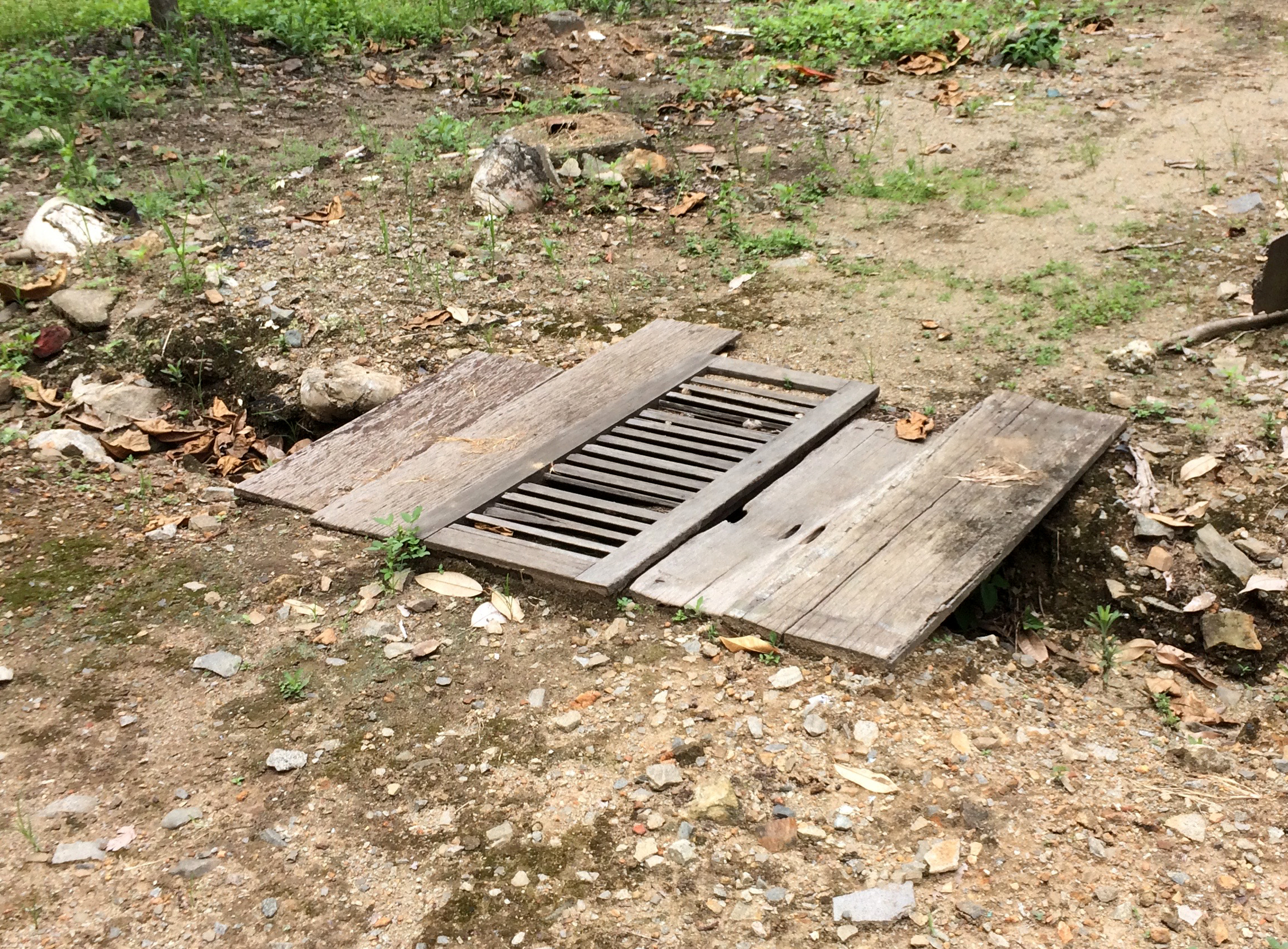
Usually, a self-built has the character of being self-sustaining. Such self-built can commonly be found near discharge pipes or drains, where water run-off can be collected or channeled for semi-private use, such as cleaning the corridors, washing up or watering plants. They tend to be temporary or quick installations, maybe due to illegality of such an act.



Shadow Spots
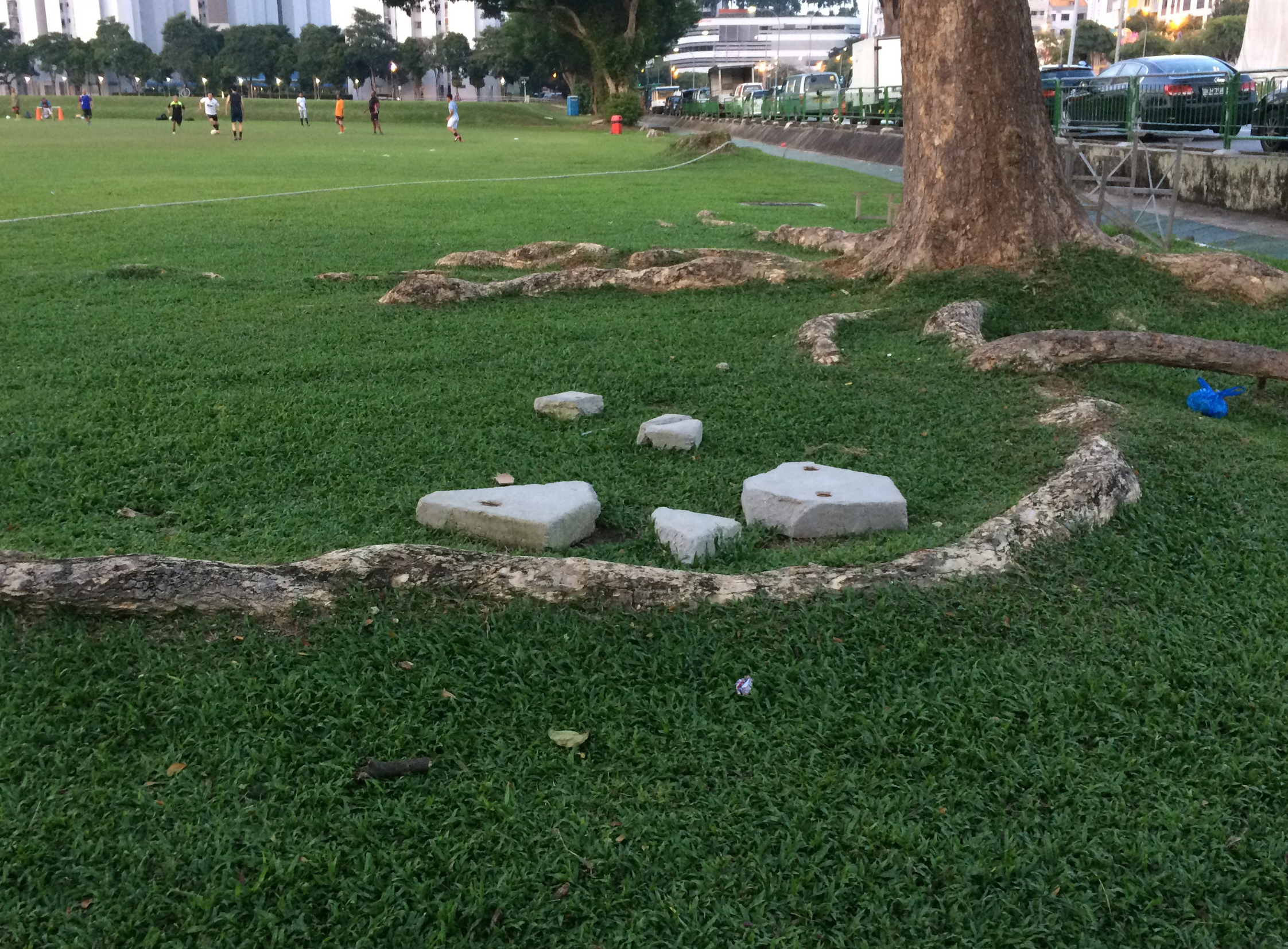
In the constant heat of the day, shadow spots become desirable as spaces of rest. Under favourable conditions, a quick rest space may evolve into a long-term one. A dweller may start to place a make-shift seat under a shady tree. This can be developed over time by themselves or by a group. We can observe them under trees next to open sports fields. They may look accidental during the day, but on evenings or weekends the logic of the arranged structures will make more sense. In the tropics, as long as there are shadows, there will always be activities.
Sun Spots
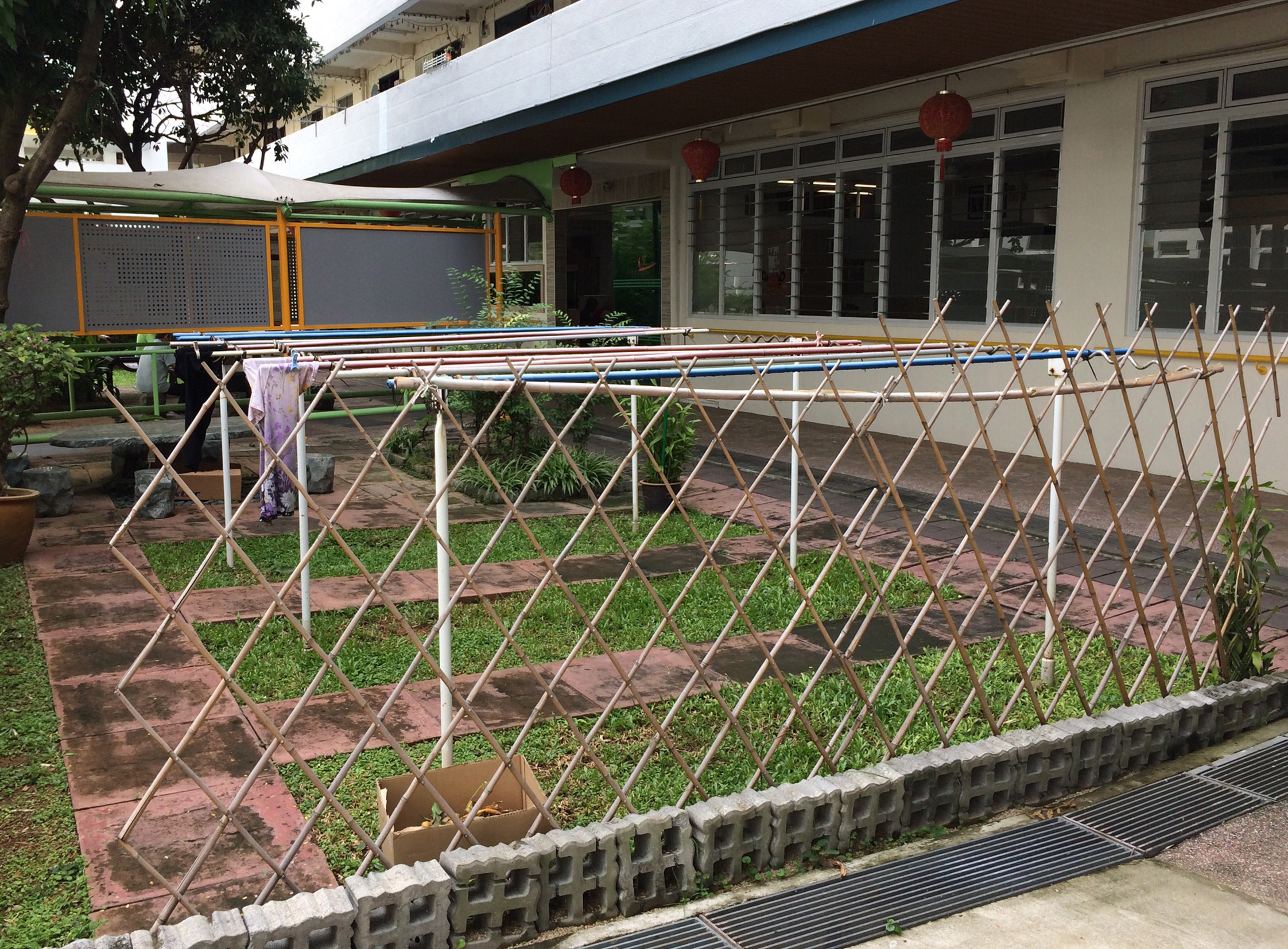
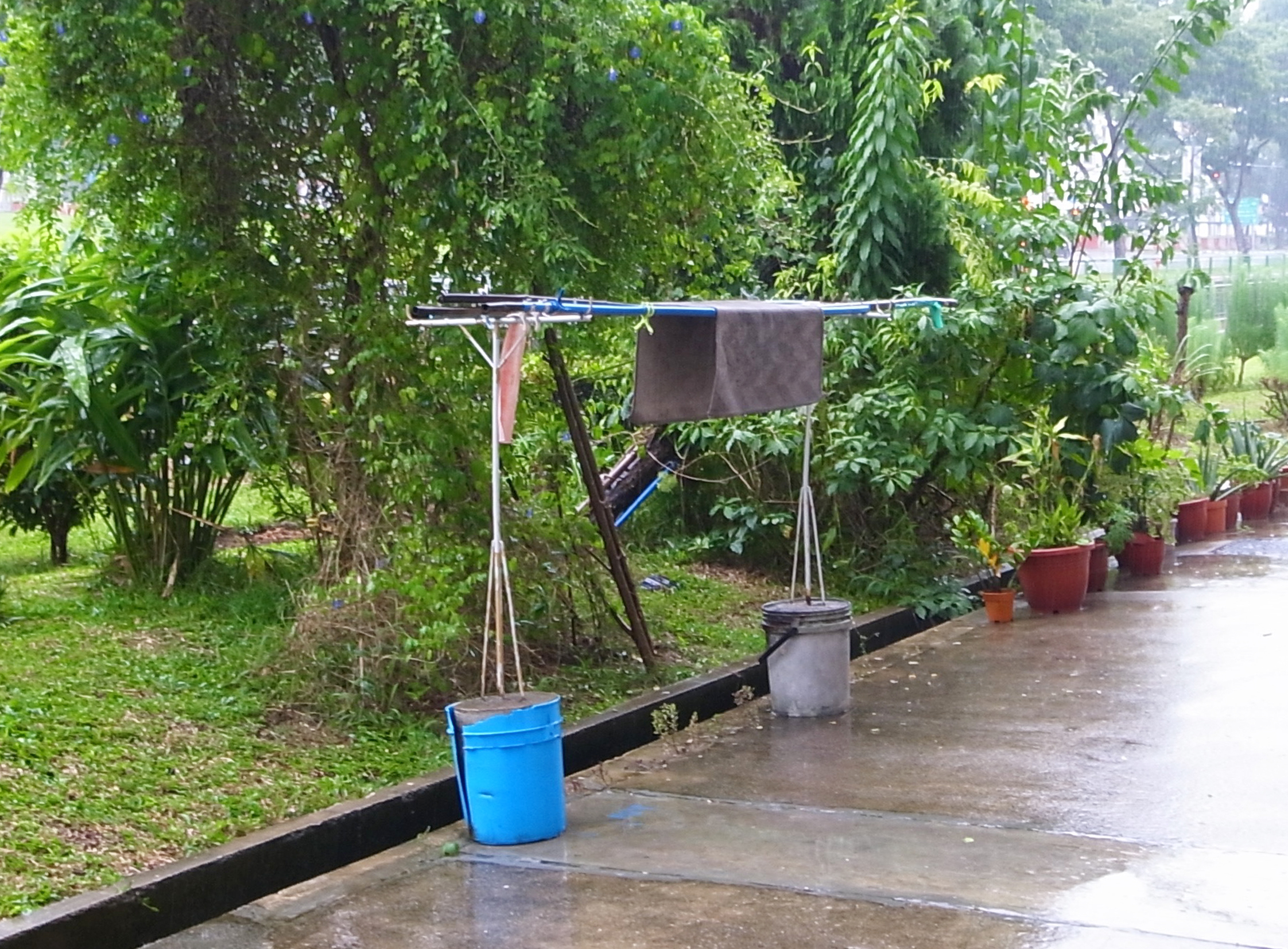
Although the sun makes our body uncomfortable, the heat also makes drying of clothes easy. Self-built structures to dry clothes or grow plants are abundant in the public spaces of a neighbourhood. Sometimes they become hybrids depending on the needs of the dweller. The busy or working observer can find these sun-structures in the evening to predict the sunny corners of a neighbourhood.
Roofs
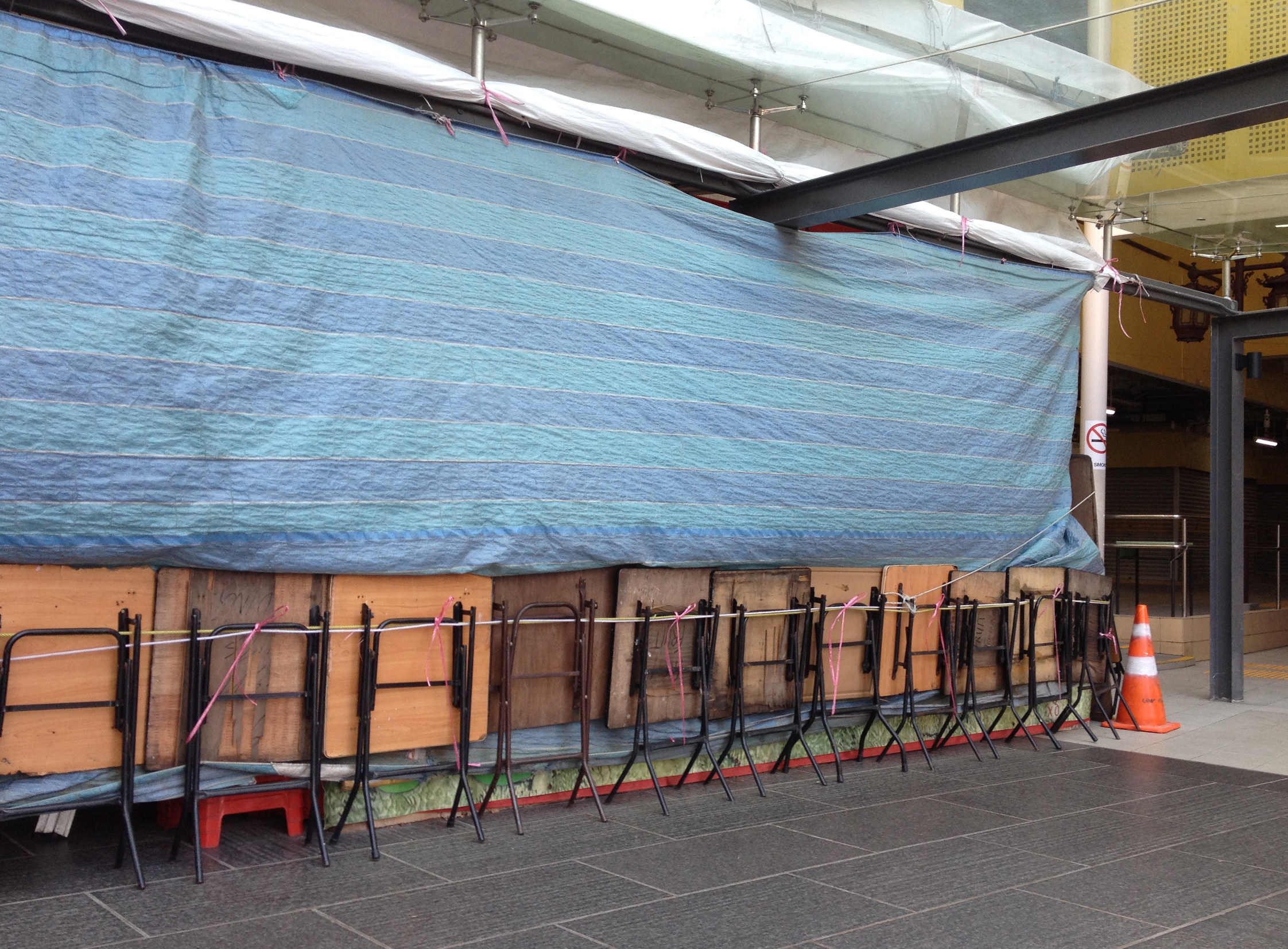
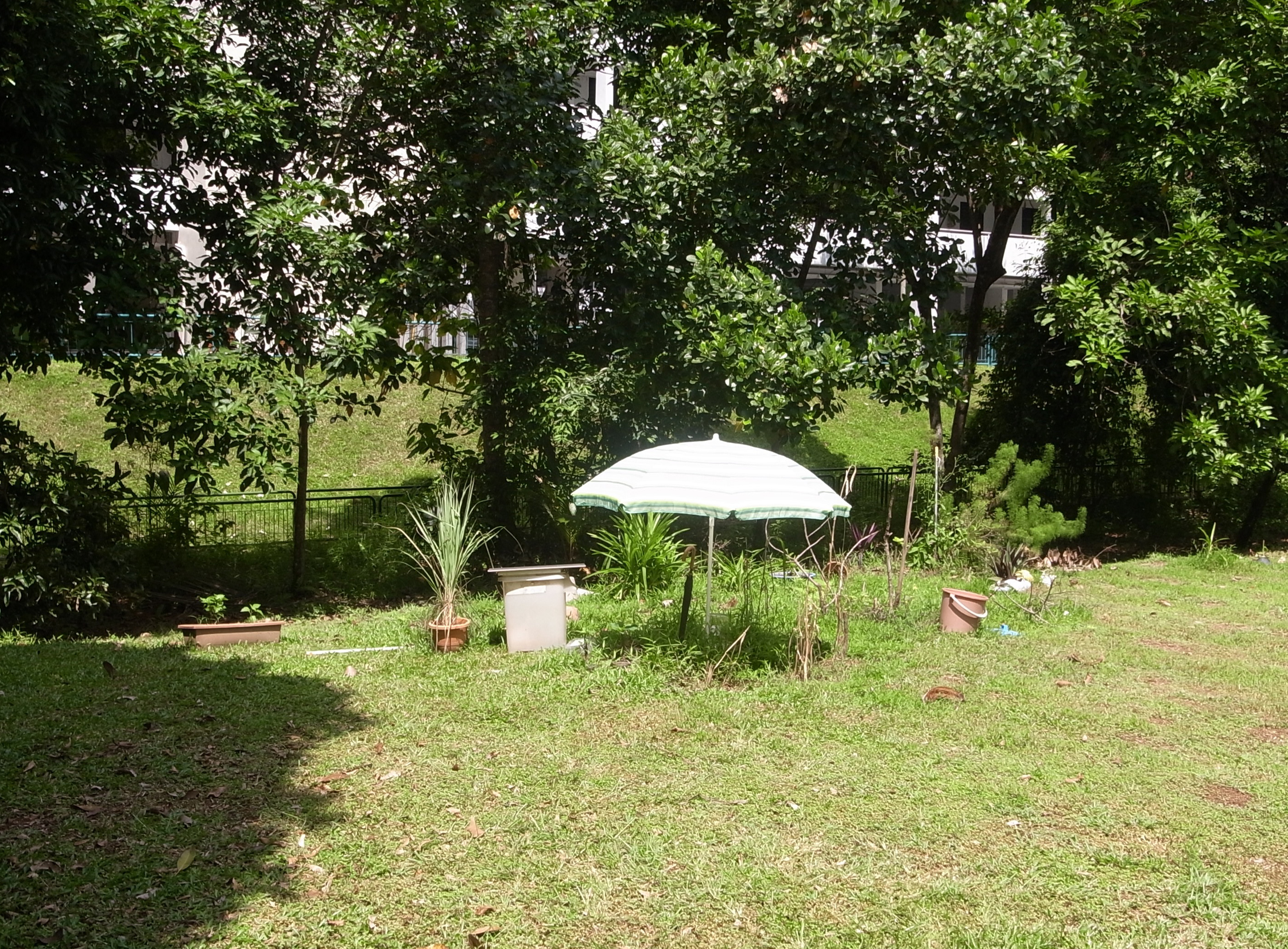
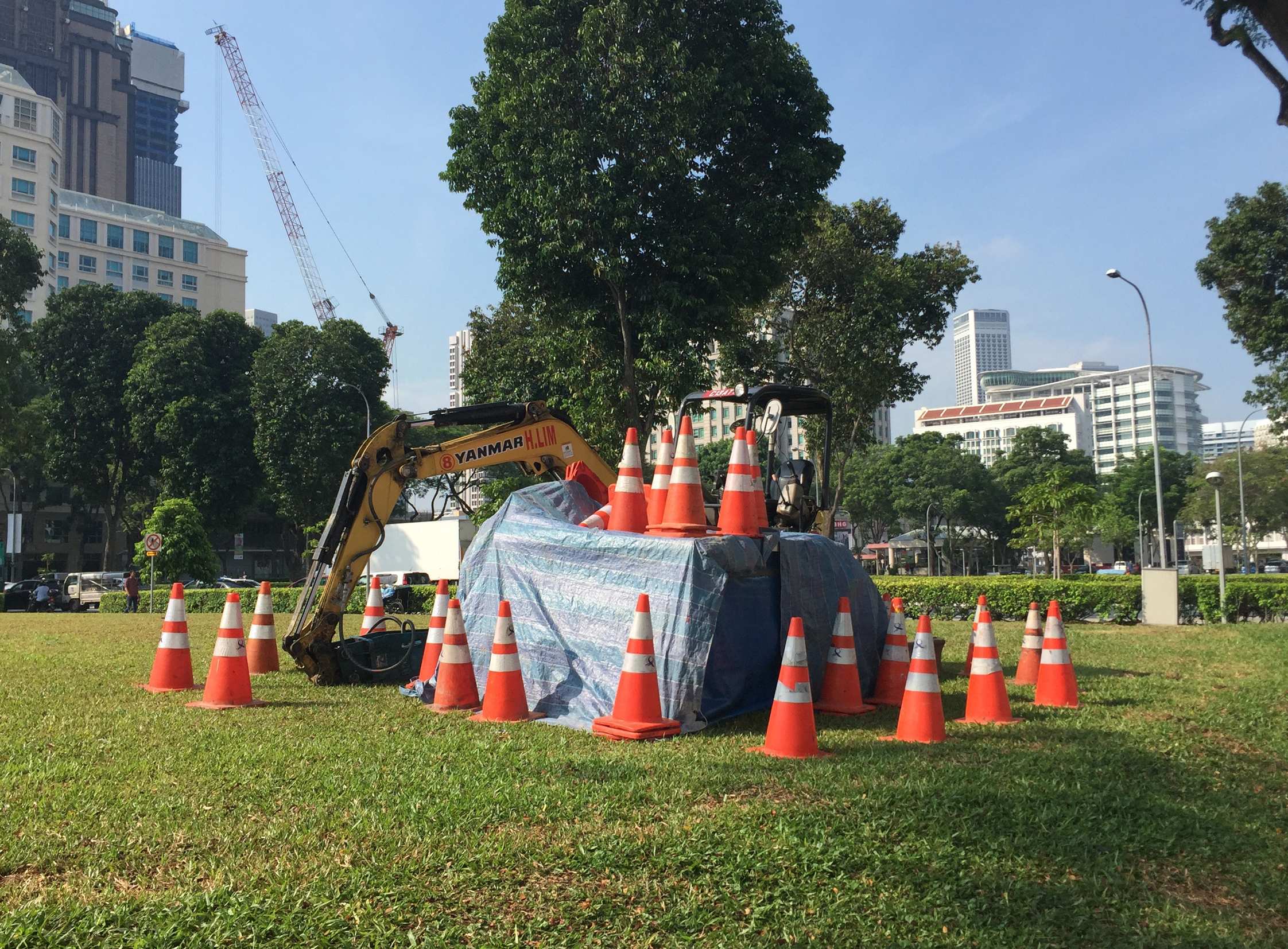
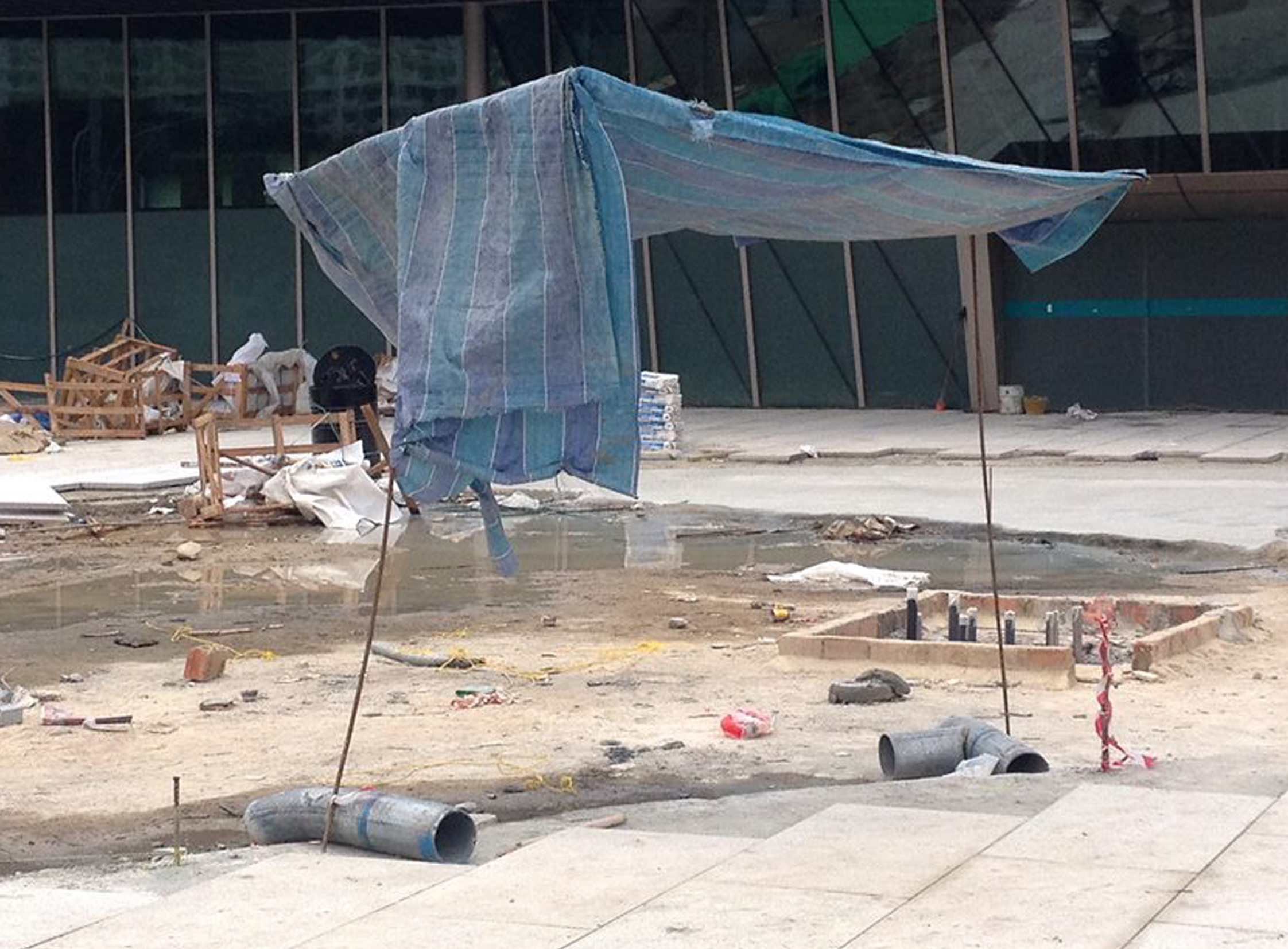
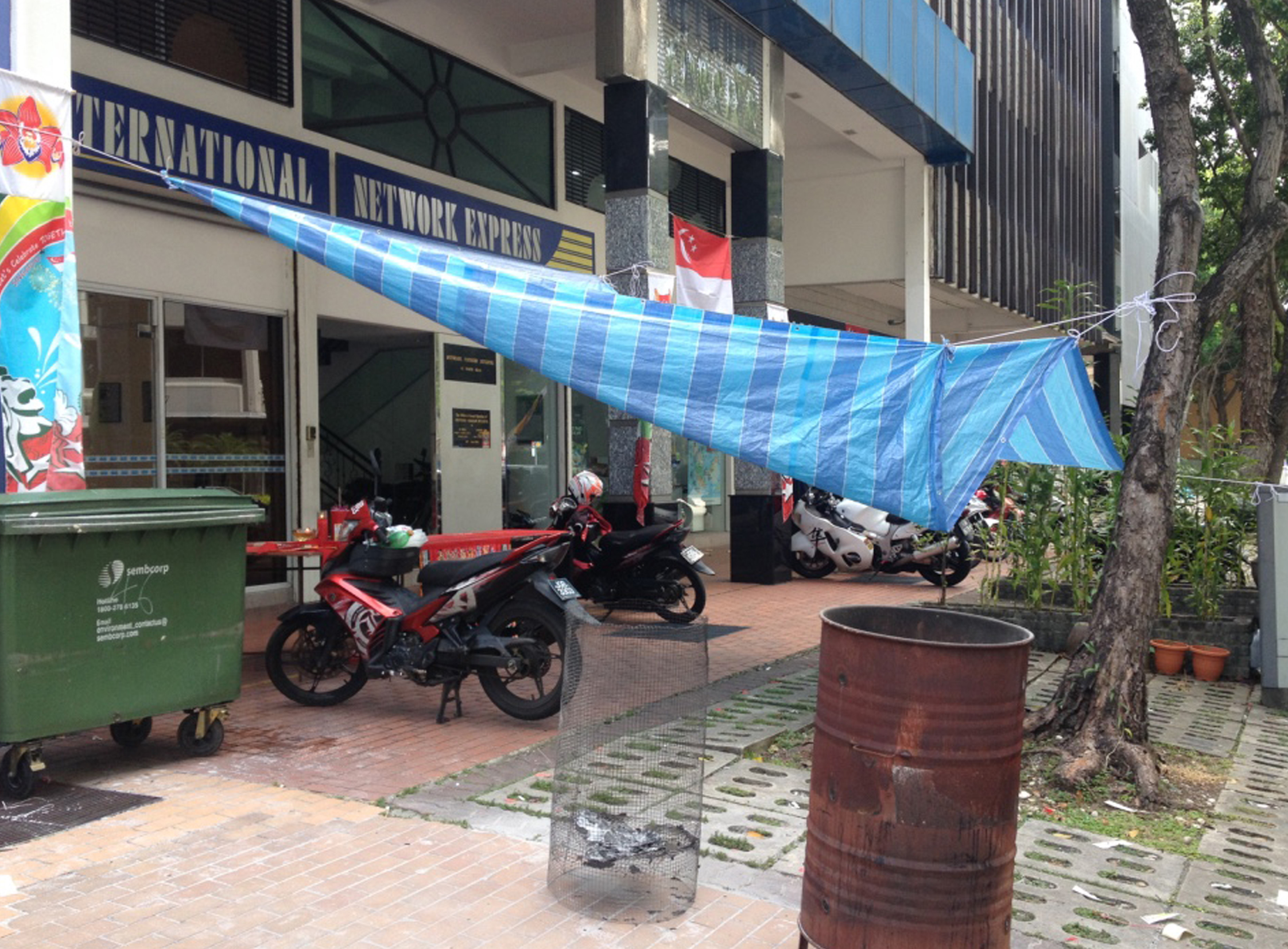
A basic dwelling needs only a roof, to protect us from the weather. A universe of self-built roofs can be commonly observed at construction sites, protecting workers from the scorching sun. Self-built roofs can also be seen at shop fronts as a strategy to extend shop space or to invite potential customers in. These roofs can later be transformed into shutters when the shop closes for the day. The Sungei Road street market is an advanced example of such a typology. With the popularity of small urban farm plots, another development of the self-built roofs can be seen as well. These roofs are an act of balanced design, where the need of the farmer to be protected from the sun is balanced with the need of the sun by the plants.
Pavilions
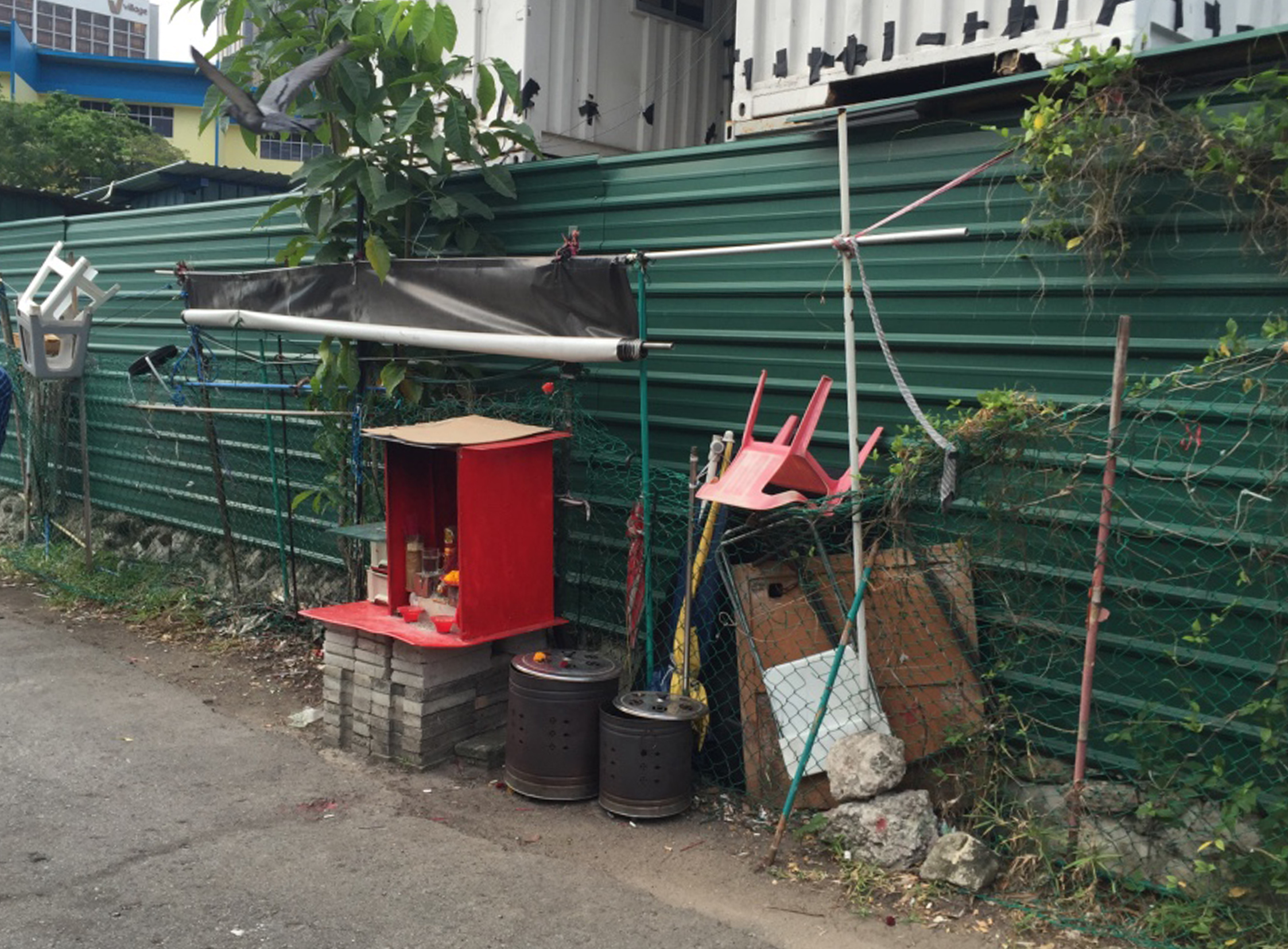
A self-built is not always about satisfying a practical function. Sometimes they are built to be purely decorative in a mundane public space. The need for beauty is important. These pavilions may develop due to a person spending long hours in a public spot. Such examples can be seen easily at security posts, hawkers or street vendors. They may also develop due to a person’s need to constantly visit the same public spots throughout the day. This may be due to work or a habit. Examples are taxi uncles’ resting spots, delivery drivers’ nap spots, or smoking corners. Sometimes these pavilions are also to house shrines or prayer spaces that have developed in public spaces over time.
Community Centers
The holy grails of observing self-built structures or objects is finding a variety of them merging into each other. Imagine a pavilion with transformable roofs extended from a sun-spot. Or an in-between space manipulated to hand song-birds, as a extension of a public bench as well as collecting water from the nearby drains. We can say that they have become organic community centers. The search for self-built combinations is endless.


 stable unstable